















The Rise of 40Gbps USB-C Cables
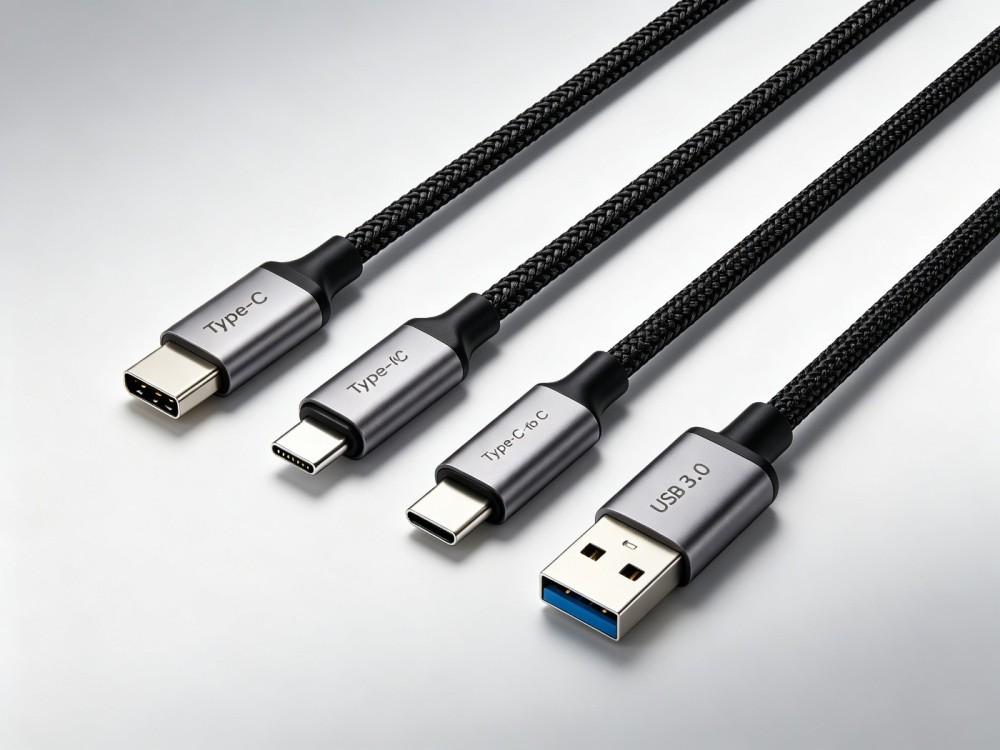
USB4 and Thunderbolt 4 mark a turning point for USB-C connectivity: a single reversible cable now carries 40Gbps data, 8K video via DP Alt Mode and up to 240W of power delivery. For OEM buyers, the difference between a cheap USB 3.0 cable and a certified USB4 cable is not just speed — it is signal integrity engineering.
Key point: 90Ω differential impedance, high-frequency shielding and certified silicon are what separate a reliable USB4 cable from one that drops to USB 2.0 speeds.
What to Check Before You Buy
Certification: Look for USB-IF certified cables with a TID number, or Thunderbolt certification for full 40Gbps + 100W.
Construction: 28AWG to 24AWG tinned copper conductors, foil + braid double shielding, and strain-relief overmolding.
Power delivery: EPR (extended power range) cables support up to 240W with PD 3.1 — check e-marker chips.
Length vs speed: Passive cables reliably hold 40Gbps to ~1m; longer runs need active or optical cables.
Testing: Verify 100% continuity, hi-pot and impedance testing on every production batch.
How SAOJIE Can Help
As an ISO9001 cable manufacturer, SAOJIE produces USB4 and Type-C assemblies with certified connectors, full-function construction and complete electrical testing. We support OEM/ODM from 0.8m retail cables to custom docking and hub assemblies.
Common Questions
Q: Are all USB-C cables the same? No — USB-C is the connector shape, but USB4/Thunderbolt requires premium construction and certification.
Q: What is the lead time? Prototypes in 48–72 hours; production orders in 2–4 weeks depending on quantity and complexity.
Q: Can you print my brand on the cable? Yes, we offer custom jackets, logos, packaging and retail-ready desig